
Every October 23rd, conservationists, wildlife enthusiasts, and mountain communities across 12 nations pause to celebrate one of Earth’s most mysterious predators, the snow leopard.
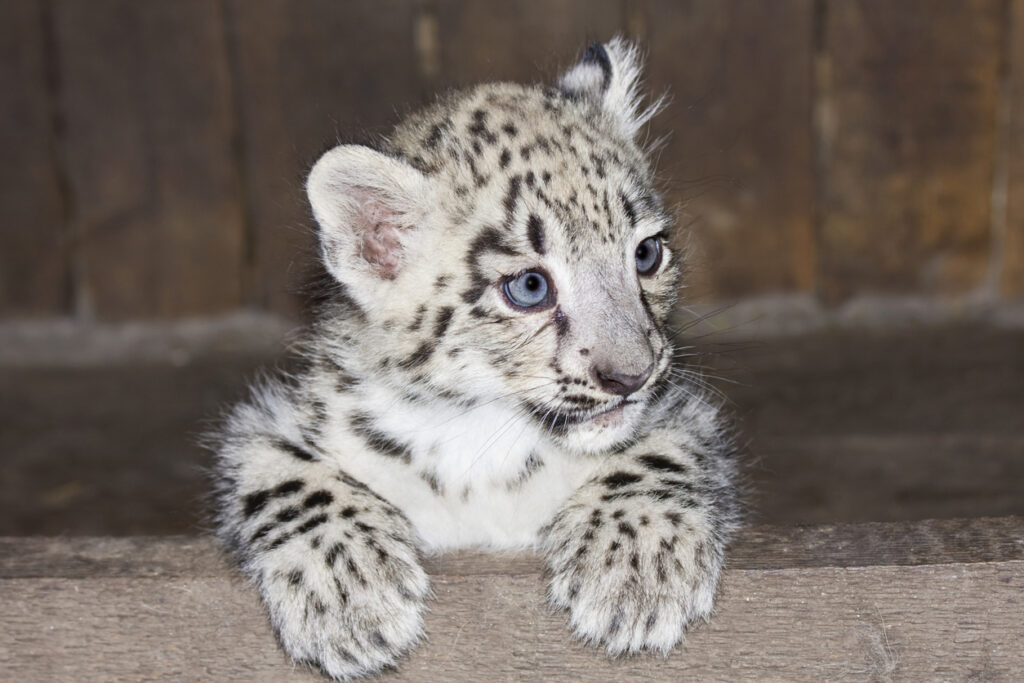
International Snow Leopard Day doesn’t just mark appreciation for a beautiful animal. It represents a crucial moment to focus attention on a creature so elusive that some researchers spend years in the field without ever seeing one, yet so vital that its survival indicates the health of entire mountain ecosystems.
Snow leopards have earned their nickname “ghost of the mountains” honestly. They inhabit some of the most remote, inhospitable terrain on the planet, and they’ve perfected the art of invisibility. However, invisibility comes with a cost. What we don’t see, we often don’t protect. And that’s exactly why International Snow Leopard Day matters so much.
The cat that lives on the roof of the world
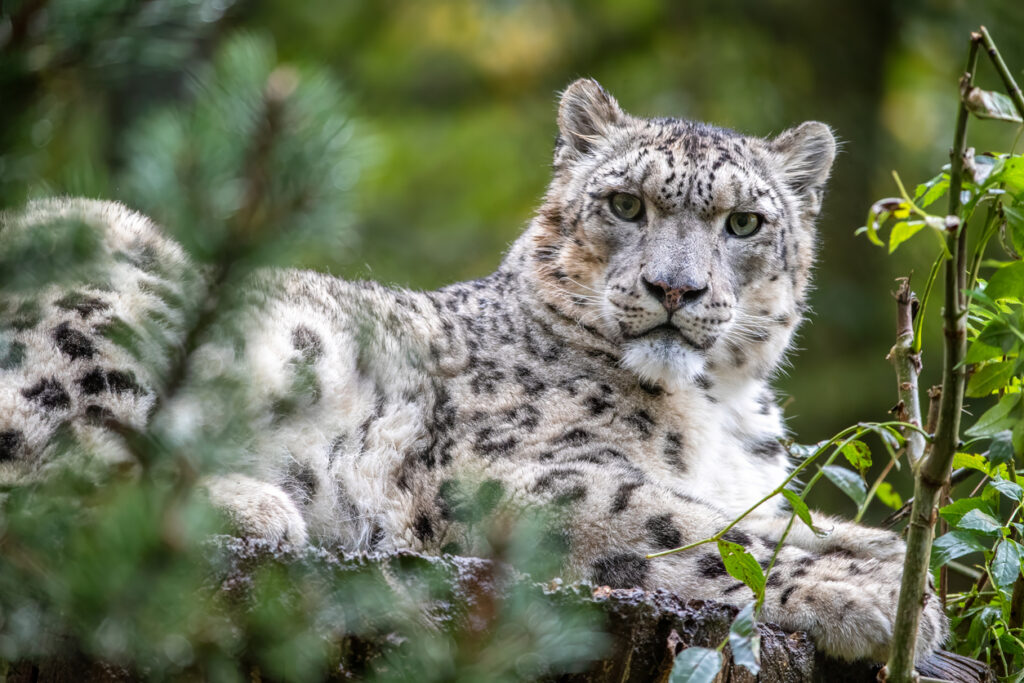
Snow leopards make their home in the mountain ranges of Central and South Asia: the Himalayas, the Tibetan Plateau, the mountains of Mongolia, Russia, and the high peaks of Afghanistan and Pakistan. They live at elevations between 3,000 and 5,500 meters, in conditions that would kill most other large predators.
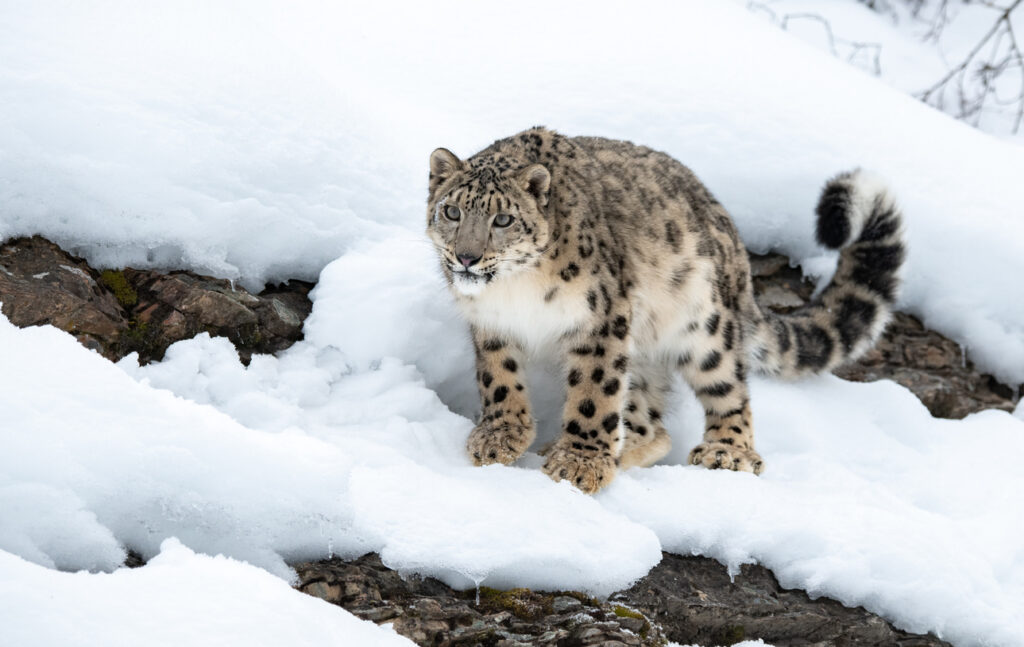
Up there, temperatures plummet to minus 40 degrees Celsius. Oxygen is scarce. Food is scattered and unpredictable. The terrain is vertical, rocky, and unforgiving. However, snow leopards thrive in this harsh environment, perfectly adapted to conditions that seem designed to make life impossible.
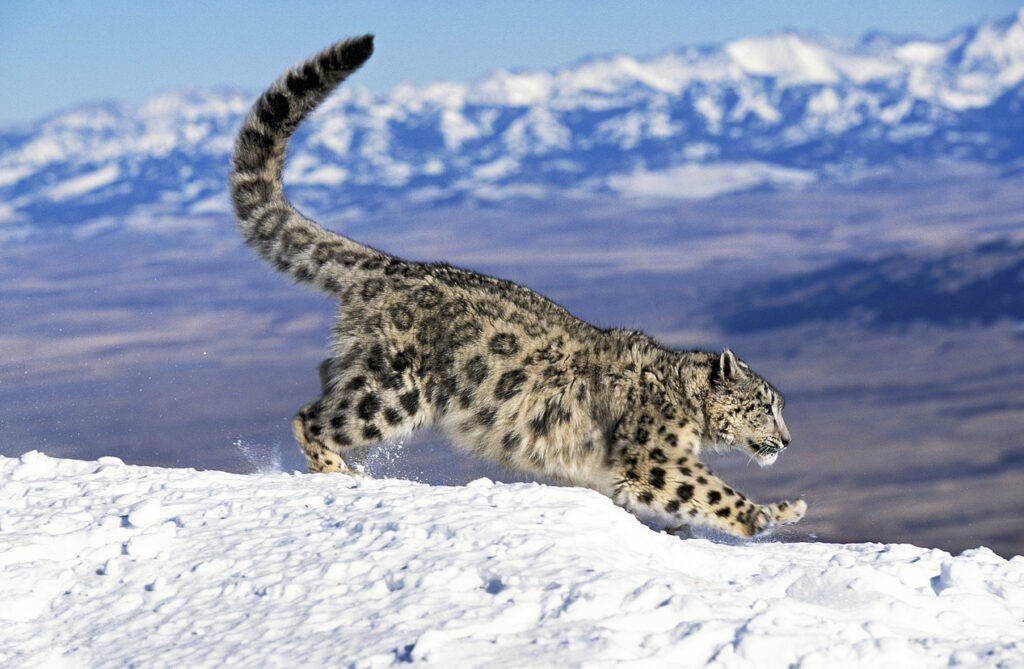
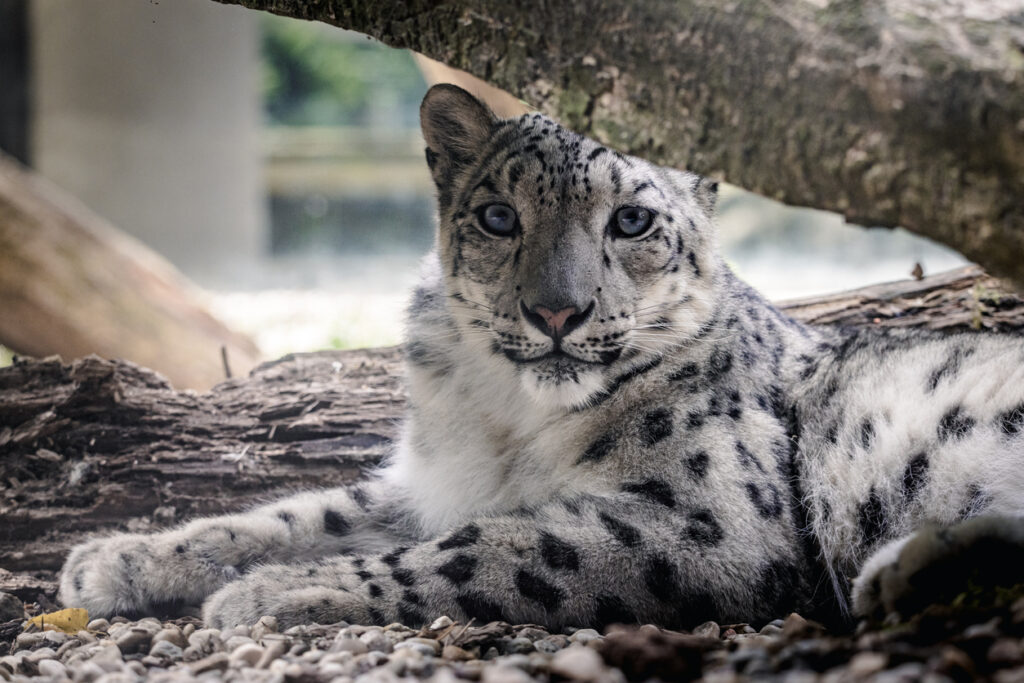
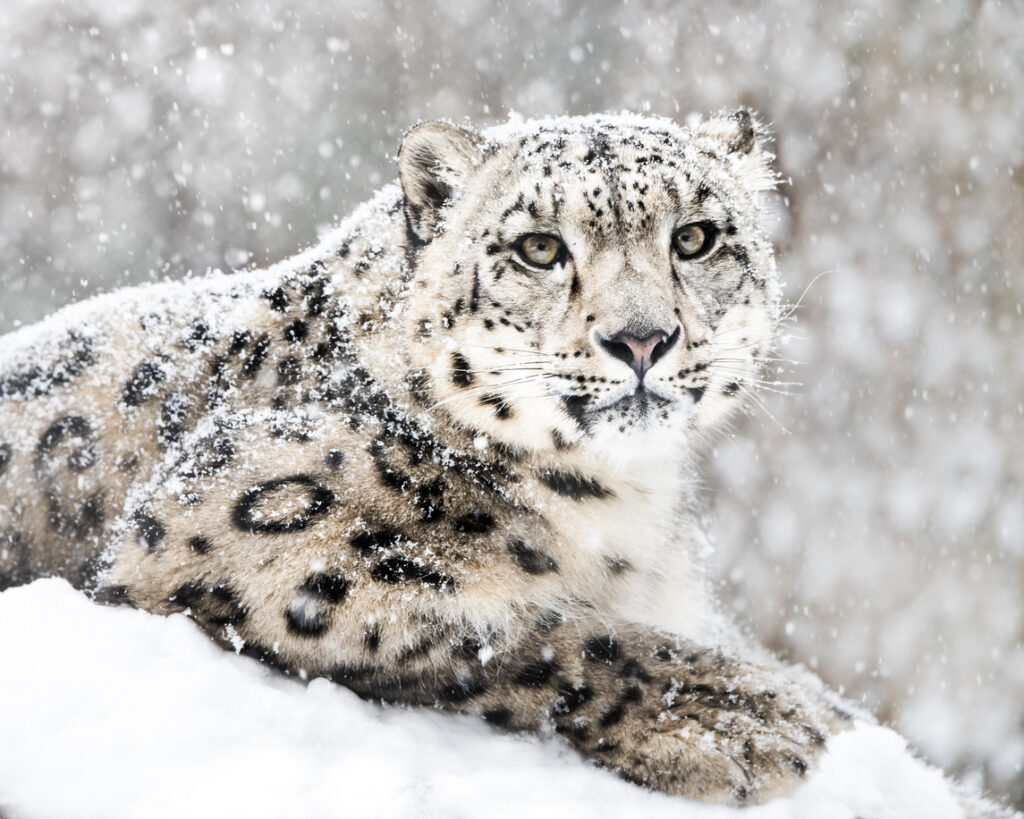
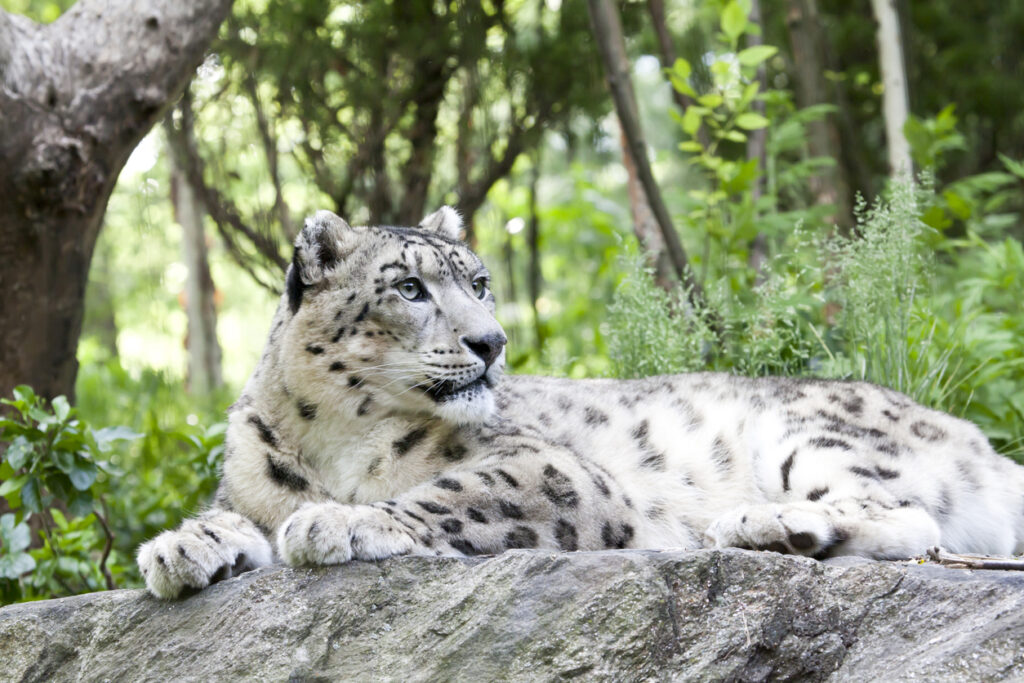
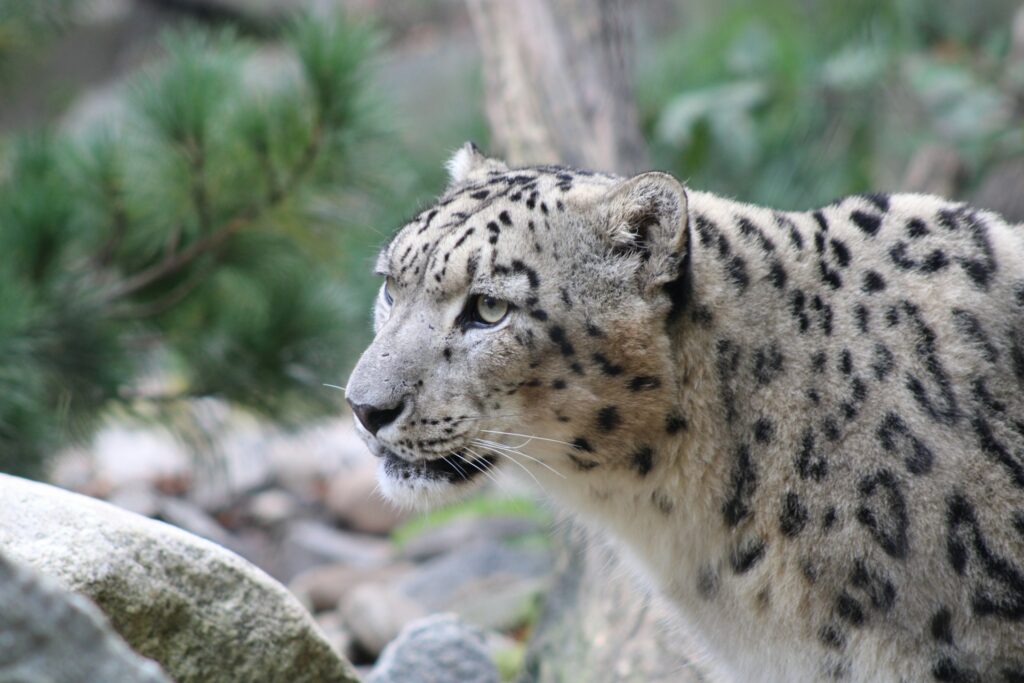
Their thick fur, the densest of any big cat, provides insulation against brutal cold. Their enormous paws act like natural snowshoes, distributing weight to prevent sinking in deep snow. Their long, heavy tail serves as both a balance aid on steep slopes and a wraparound scarf for warmth during rest.
There are roughly 4,000 to 6,500 snow leopards left in the wild, though exact numbers are difficult to determine given their remote habitat and elusive nature. They’re spread across twelve countries, making conservation a complex international challenge.
Built for vertical hunting
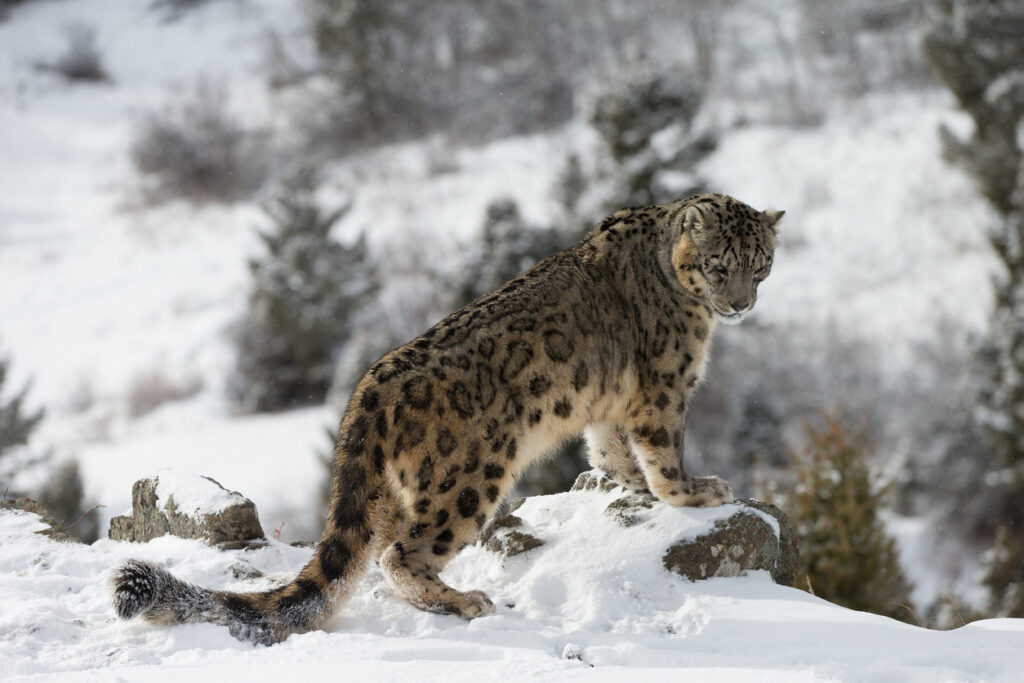
Watch footage of a snow leopard hunt, and you’ll see something remarkable. These cats don’t just chase prey across horizontal ground like lions or cheetahs. They hunt vertically, launching themselves down near-vertical cliff faces to ambush prey below. That’s because a snow leopard can leap up to 15 meters in a single bound. They use this extraordinary jumping ability to navigate their mountainous terrain, bounding from rock to rock with a grace that seems to defy gravity.
Their primary prey includes blue sheep, Himalayan tahr, marmots, and various wild goats and sheep species. Unlike many big cats that hunt regularly, snow leopards are opportunistic feeders. They might make only five or six major kills per year, relying on each carcass to sustain them for an extended period in their energy-scarce environment.
The big cat that can’t roar
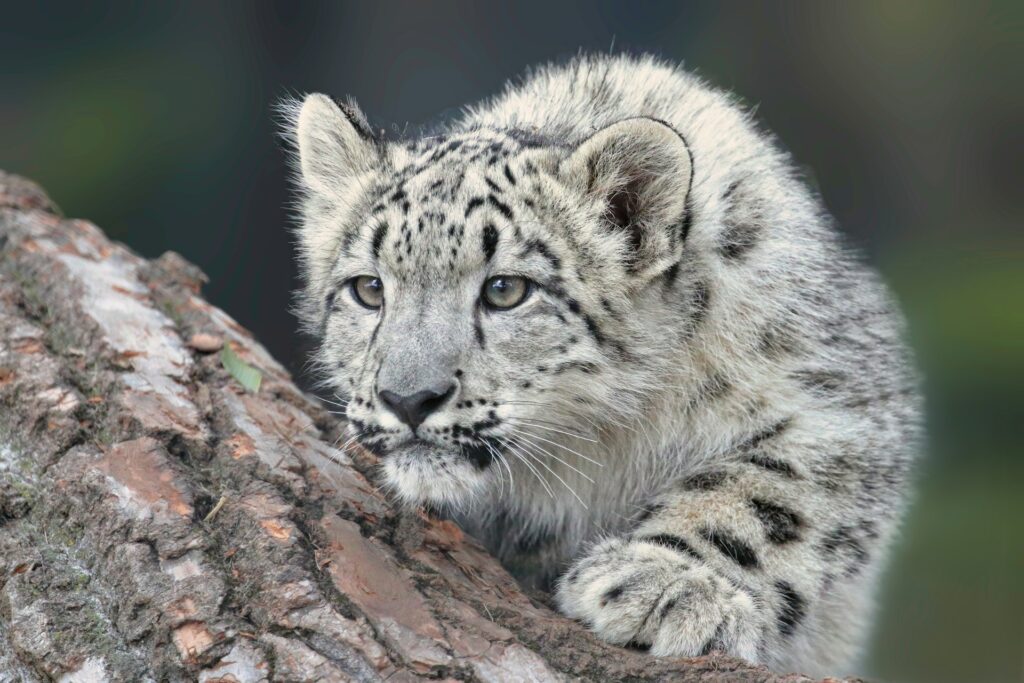
Despite being classified as a big cat, snow leopards can’t roar. They lack the specialized larynx structure that allows lions, tigers, leopards, and jaguars to produce those deep, resonant roars. Instead, snow leopards make a range of other vocalisations. They hiss, growl, mew, and produce a distinctive “chuffing” sound.
Most remarkably, snow leopards purr. They’re the largest cat species that retains this ability, producing a deep, rumbling purr similar to a domestic cat but much louder and more powerful. Their inability to roar has led some scientists to question whether snow leopards should be classified separately from other big cats.
Ghosts in more ways than one
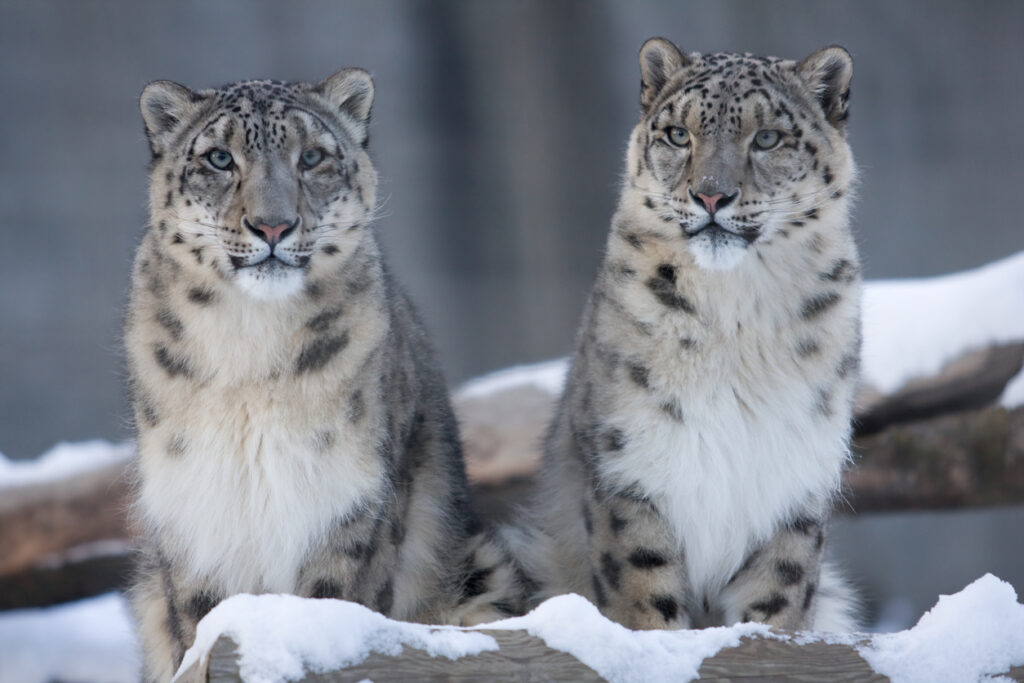
The “ghost cat” nickname isn’t just about their pale, smoke-gray coats blending into rocky mountainsides. It’s about their astonishing elusiveness. Snow leopards are solitary, secretive, and primarily crepuscular, meaning most active during dawn and dusk when light conditions make them even harder to spot.
Wildlife researchers working in snow leopard territory often find signs of the cats, such as tracks, scat, scrape marks, and kill sites, without ever glimpsing the animal itself. Camera trap studies have revolutionized snow leopard research, finally providing images of animals that would otherwise remain nearly mythical.
One researcher in Mongolia spent three years tracking snow leopards yet only saw a living snow leopard in the wild twice. The cats are simply that good at staying hidden. This elusiveness served them well for millennia, but in the modern world, it’s become a liability. Animals we can’t see are easier to ignore.
Why they’re disappearing
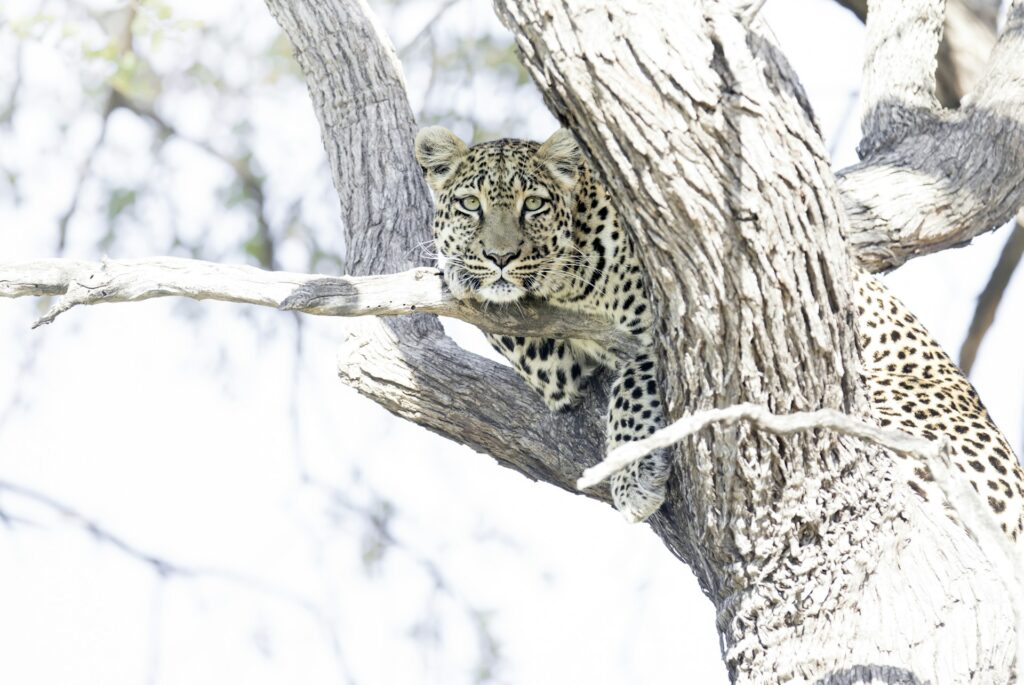
Snow leopard populations face multiple, interconnected threats. Habitat loss is significant as human settlements expand into mountain regions. Climate change is altering their high-altitude ecosystems, pushing treelines higher and changing the distribution of prey species. Poaching remains a serious problem. Snow leopard pelts are highly valued, and their bones are used in traditional medicine. Despite legal protections across their range, illegal hunting continues.
However, perhaps the most significant threat is human-wildlife conflict. As wild prey populations decline, snow leopards increasingly turn to livestock. When a snow leopard kills livestock, herders often retaliate, killing the cat to protect their economic survival.
This creates a tragic situation where both humans and wildlife are victims of circumstance. Herders living in poverty can’t afford to lose livestock. Snow leopards are simply following their instincts. There are no villains here, just desperate needs colliding in unforgiving landscapes.
The surprising allies
Here’s where the story takes a hopeful turn. Increasingly, the very communities that once viewed snow leopards as enemies are becoming their most important protectors. Conservation programs across snow leopard territory have recognized that sustainable protection requires working with, not against, local people.
Livestock insurance programs compensate herders for animals killed by snow leopards, removing the economic incentive for revenge killings. Predator-proof corrals help protect livestock at night when they’re most vulnerable. Some programs provide alternative income sources, such as tourism or handicraft production.
Community-based conservation initiatives employ local people as wildlife monitors, paying them to document snow leopard presence through camera trapping and tracking. Former poachers have become protectors, using their knowledge of the mountains to help research rather than harm snow leopards.
In Ladakh, India, homestay programs allow tourists to stay with local families while hoping to spot snow leopards. The income from these programs now exceeds what families previously lost to snow leopard predation, fundamentally changing the economic equation.
Climate change’s canary in the coalmine
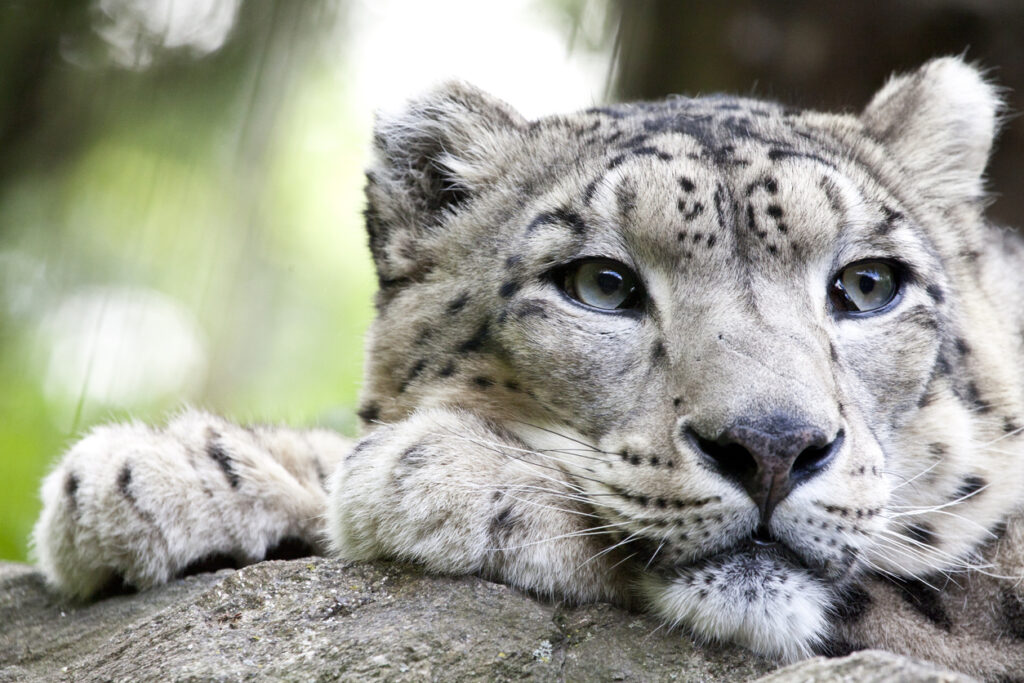
Snow leopards serve as important indicators of mountain ecosystem health. As apex predators, their presence indicates functioning prey populations, healthy habitat, and relatively undisturbed ecosystems.
Climate change poses an existential threat to snow leopards and their habitat. Rising temperatures are pushing treelines higher up mountains, shrinking the alpine zones where snow leopards hunt. Some models predict that climate change could eliminate up to 30% of current snow leopard habitat by 2070.
The cats can’t simply move higher, since they’re already near the tops of mountains. Unlike lowland species that might migrate to new suitable habitat, snow leopards are running out of mountain. Protecting snow leopards therefore isn’t just about saving one species. It’s about preserving entire mountain ecosystems that provide water, regulate climate, and support human communities downstream.
The technology revolution
Modern technology has transformed snow leopard research and conservation. Camera traps now provide unprecedented glimpses into snow leopard behaviour, capturing images of animals that researchers might never see directly. GPS collaring allows scientists to track individual cats across vast territories, revealing movement patterns, habitat preferences, and territory sizes. This data informs conservation planning, helping identify critical corridors and priority protection areas.
Genetic analysis from scat samples lets researchers identify individual animals and assess population genetic diversity without ever capturing or disturbing the cats. Satellite imagery and GIS mapping help predict suitable snow leopard habitat and model how climate change might affect their distribution. These technologies haven’t made snow leopards less elusive, but they’ve made studying and protecting them more feasible.
International cooperation
Snow leopards don’t respect national borders, and neither can their conservation. The 12 countries in their range represent diverse political situations, economic conditions, and conservation capacities.
International Snow Leopard Day emerged from recognition that these nations needed to coordinate efforts. The Global Snow Leopard and Ecosystem Protection Program brings together governments, NGOs, and local communities to develop unified conservation strategies.
Cross-border corridors are crucial for maintaining genetic diversity and allowing snow leopards to move between populations. International cooperation also addresses poaching and illegal trade, which operate across borders.
What success looks like
Conservation success for snow leopards won’t look like dramatically increased populations. These cats naturally exist at low densities across vast areas. Success means stable populations across their current range, reduced human-wildlife conflict, and protected corridors connecting populations.
It means communities that value snow leopards as assets rather than threats. It means sustainable tourism that provides income without disturbing the cats. Several areas show what this success can look like. In parts of Nepal and India, community-based conservation has achieved years without retaliatory killings. In Pakistan’s mountain communities, snow leopard ecotourism now generates significant local income.
Why we need International Snow Leopard Day
Snow leopards face a visibility problem, literally. They live in remote places most people will never visit. They’re nearly impossible to see, even when you’re in their habitat. They’re easy to ignore. International Snow Leopard Day counteracts this invisibility. It creates an annual moment when media attention, educational programs, and conservation messaging focus specifically on these cats. It reminds the world that snow leopards exist, matter, and need protection.
The day also serves practical purposes. It’s used to announce new conservation initiatives, release research findings, and mobilize funding. For the communities living alongside snow leopards, the day acknowledges their role in conservation.
What you can do
You don’t need to travel to the Himalayas to support snow leopard conservation. Organizations like the Snow Leopard Trust, Snow Leopard Conservancy, and Panthera run evidence-based programs with strong local partnerships.
Raising awareness matters too. Share information about snow leopards on social media. Support retailers and companies that source products ethically from snow leopard range countries. Advocate for climate action, since climate change threatens snow leopard habitat fundamentally, supporting policies that address global warming helps these cats.
The ghost that needs to be seen
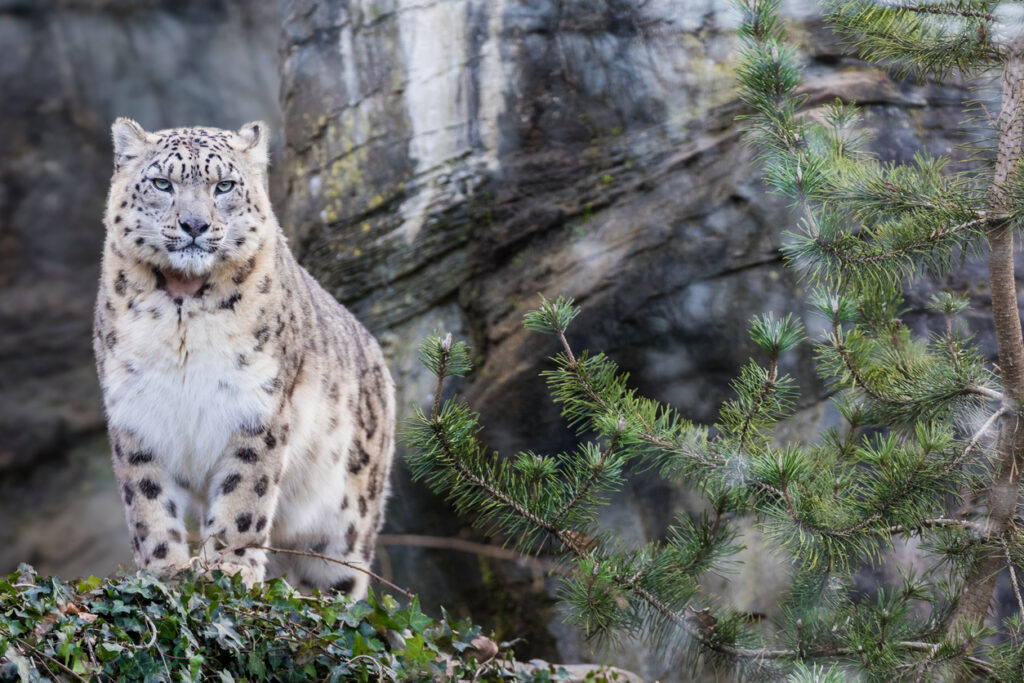
There’s a beautiful irony at the heart of snow leopard conservation. These cats have survived for millennia precisely because they’re invisible, elusive, and adapted to places humans rarely go. But now their survival depends on being seen, not physically necessarily, but in our consciousness, our priorities, our conservation planning.
International Snow Leopard Day is about making the invisible visible. It’s about ensuring that a cat most people will never see in person remains present in the wild mountains where it belongs. Snow leopards don’t need us to survive in the way domestic animals do. What they need is for us to not destroy their environment, not kill them for their fur, and not eliminate their prey base.
That’s what International Snow Leopard Day ultimately represents: a commitment to giving these ghost cats what they need to remain ghosts, beautiful and mysterious and alive in the high mountains where they belong. The world needs its ghost cats. And on October 23rd, we remember why.